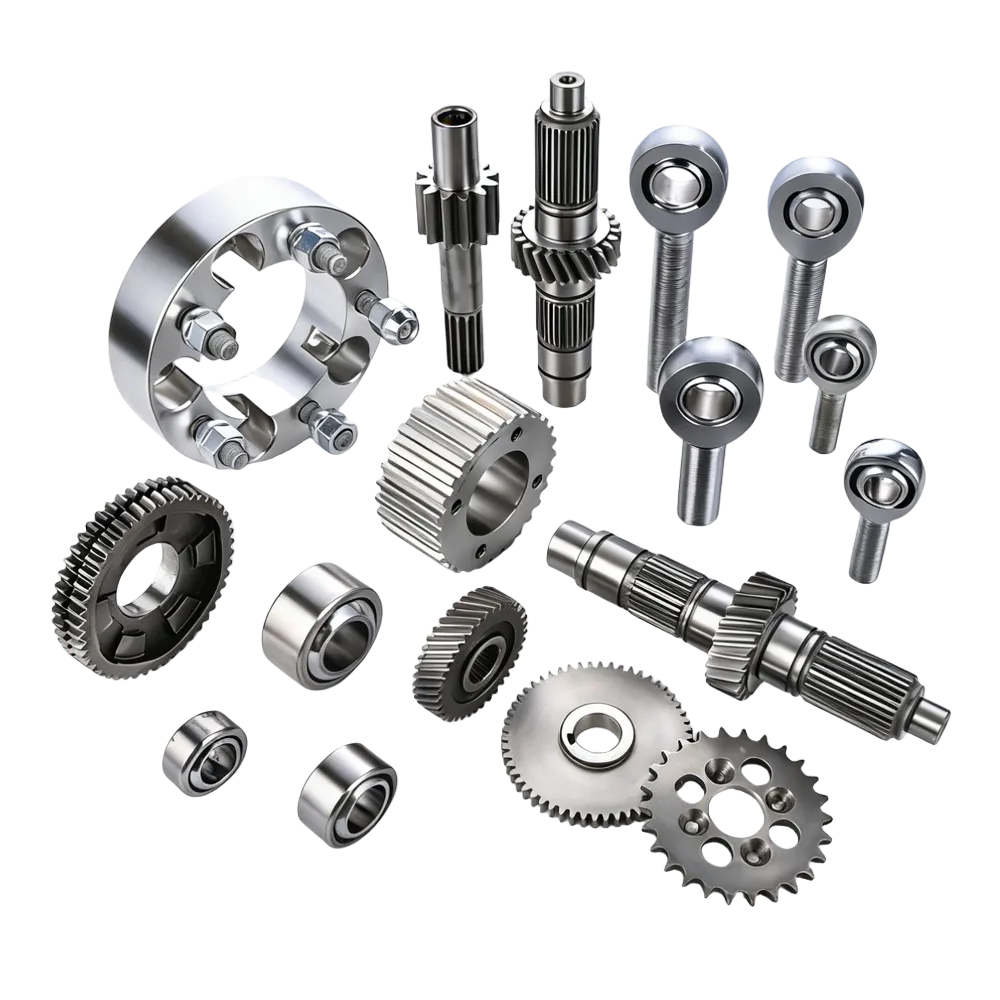
The mechanics of three-axis movement
In a suspension system, links rarely move in a perfect 2D line. As one wheel hits a bump, the axle tilts, requiring the links to twist.
- Rotational Motion: The ball spins in the race to follow the link’s primary travel.
- Angular Misalignment: The ball tilts side-to-side to accommodate the “roll” of the chassis.
- Degrees of Freedom: A Heim joint provides the necessary flexibility to ensure the suspension doesn’t “lock” (bind), which could lead to bracket failure or snapped bolts.
Load distribution during articulation
According to ISO 12240-4 standards, spherical bearings are designed to handle:
- Radial Loads: Forces applied perpendicular to the bolt.
- Axial Loads: Forces applied along the bolt (pushing the ball out of the side). Note that axial capacity is typically only 10-15% of the radial capacity.
- Tolerances: Precision articulation requires a radial clearance of near zero (0.0000″ to 0.0005″) to prevent the “clunking” sounds associated with loose joints.
Related reading: Understanding misalignment angle and why it matters · What is a “high misalignment” rod end? · Single shear vs. double shear mounting explained